Showing posts with label Temple. Show all posts

Friday, February 13, 2015

Busan, South Korea: Beomeosa Temple

Apart from visiting Gamcheon Cultural Village, I thought Beomeosa and Haedong Yonggungsa Temples would make the trip complete. Unfortunately, I couldn't wake up in time the next day for a visit to Yonggungsa Temple, so I guess it means I have a reason to visit Busan again sometime soon! I would love to make time for a temple stay too if I have a chance!
Beomeosa Temple

Beomeosa Temple

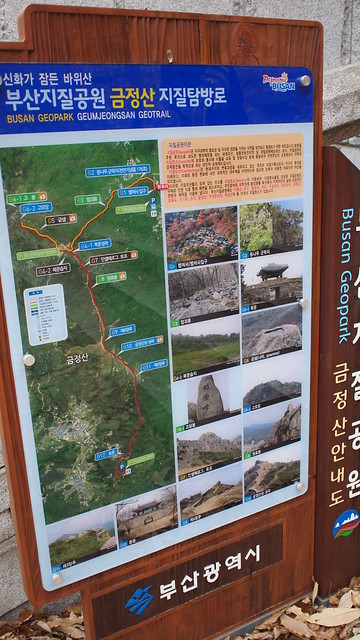
This is also park of a Geopark Geotrail
Beomeosa Temple

Beomeosa Temple

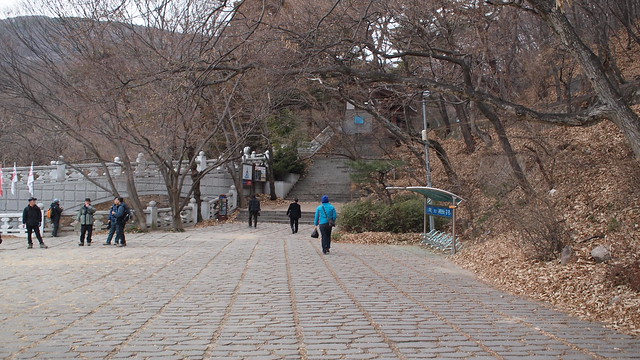
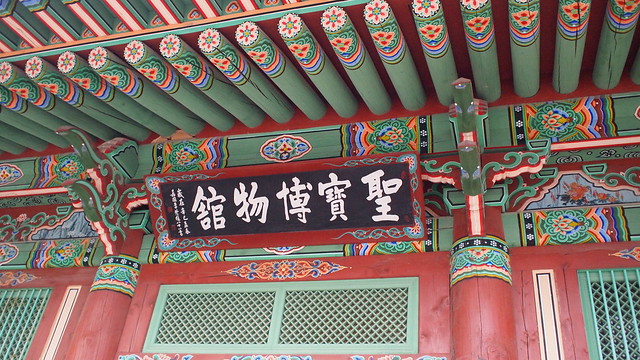
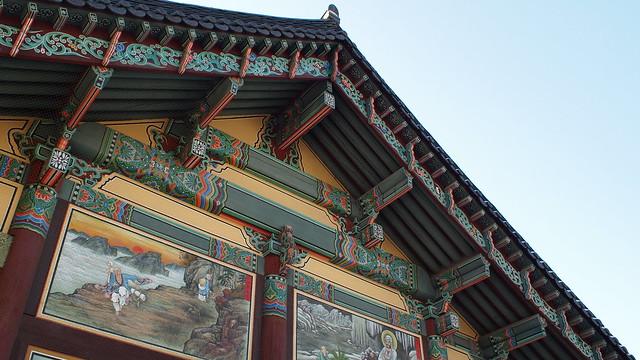
Beomeosa Temple is the most informative temple I've visited in Korea thus far.
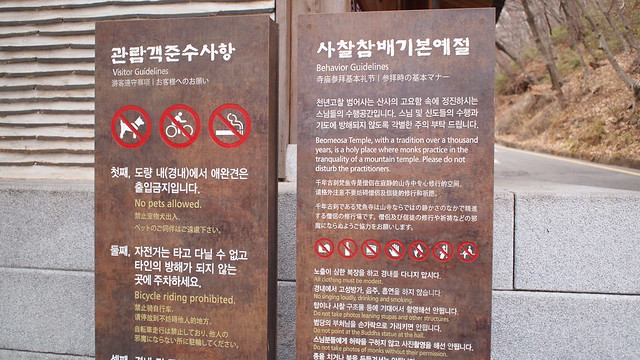
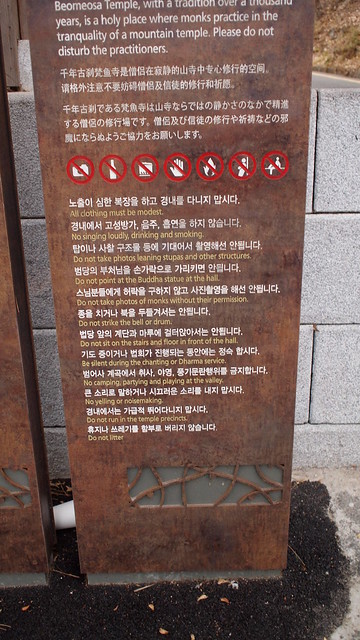
Beomeosa Temple, with a tradition over a thousand years, in a holy place where monnks practice in the tranquility of a mountain temple. Please do not disturb the practitioners.
Beomeosa Temple

Beomeosa Temple

Beomeosa Temple
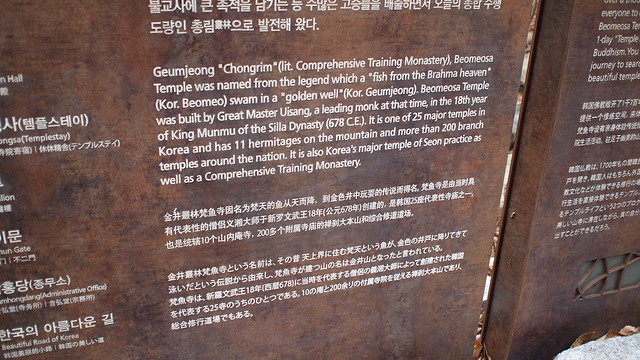
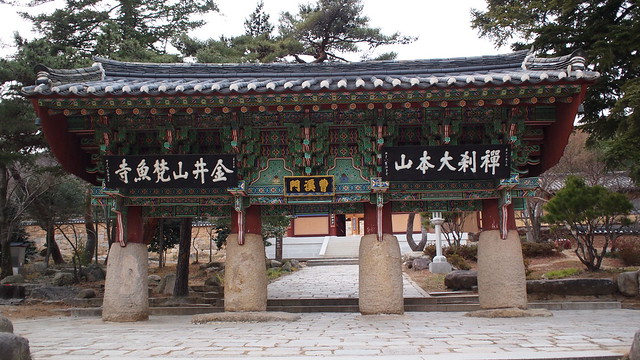
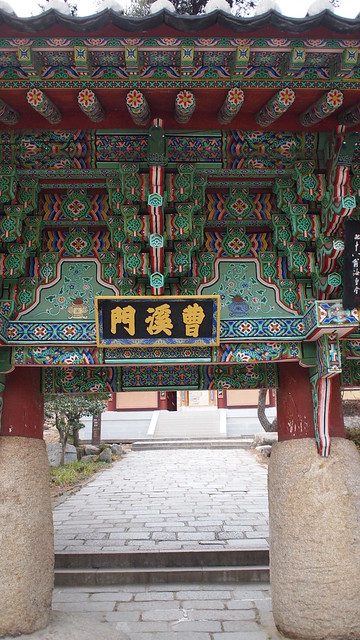
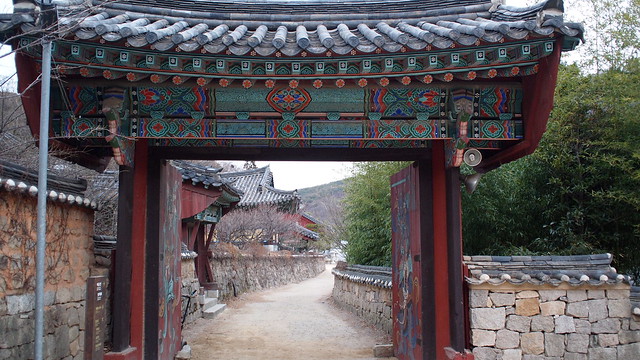
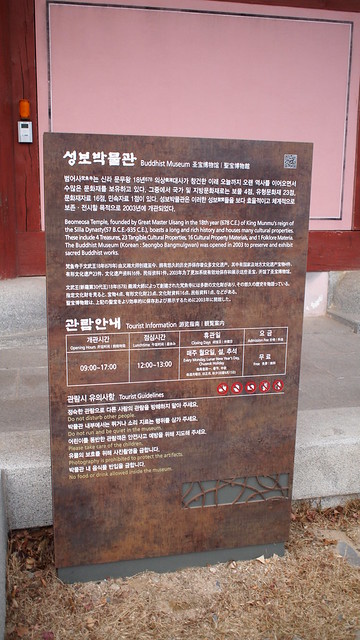
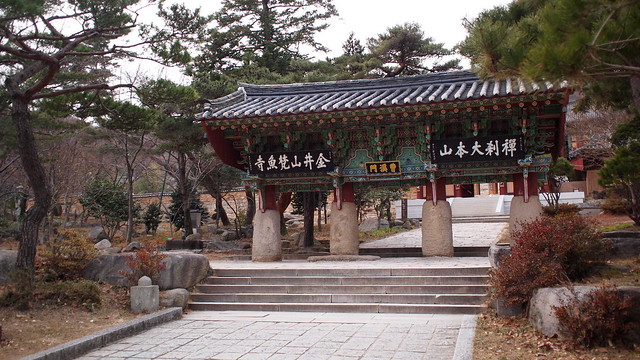
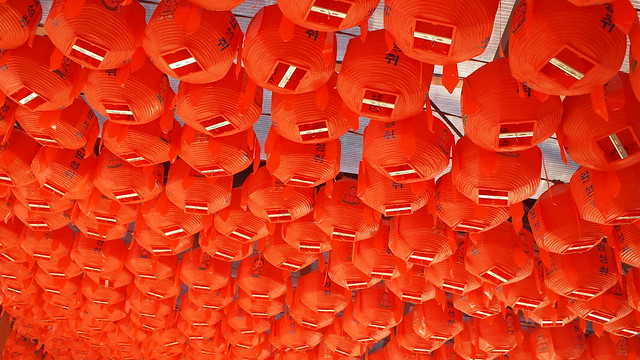
Geumjeong "Chongrim" (lit. Comprehensive Training Monastery), Beomeosa Temple was named from the legend which is a "fish from the Brahma heaven" (Kor. Beomeo) swam in a "golden well" (Kor. Geumjeong). Beomeosa Temple was built by Great Master Uisang, a leading monk at the time, in the 18th year of King Munmu of the Silla Dynasty (678 CE). It is one of 25 major temples in Korea and has 11 hermitages on the mountain and more than 200 branch temples around the nation. It is also Korea's major temple of Seon practice as well as a Comprehensive Training Monastery.

Templestay
Korean temples have been a place of refuge for the Korean people for more than 1,700 years. These temples, with a tradition over a thousand years have opened their gates to allow everyone to experience the traditional Korean Buddhist culture. Beomeosa Temple offers overnight "Templestay" programs, 1-day "Temple Life" programs for visitors to learn and feel Korean Buddhism. You can cleanse your mind through a meaningful journey to search your true nature while staying at a beautiful temple.

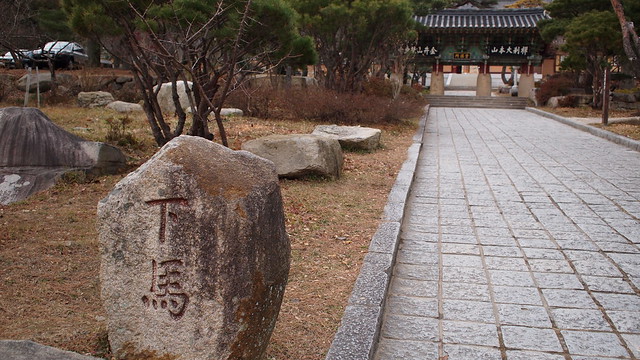
It's time to get off your horse.
Beomeosa Temple

Beomeosa Temple

Beomeosa Temple

Beomeosa Temple

Beomeosa Temple

Beomeosa Temple

Beomeosa Temple
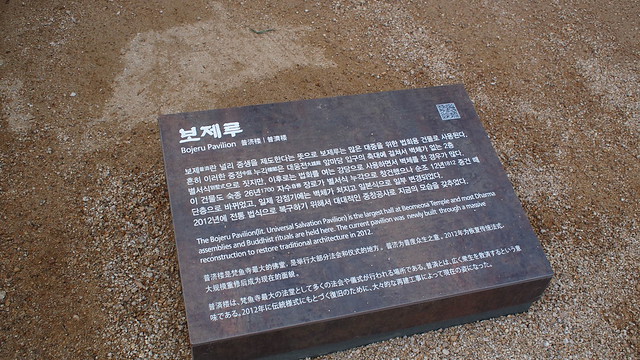
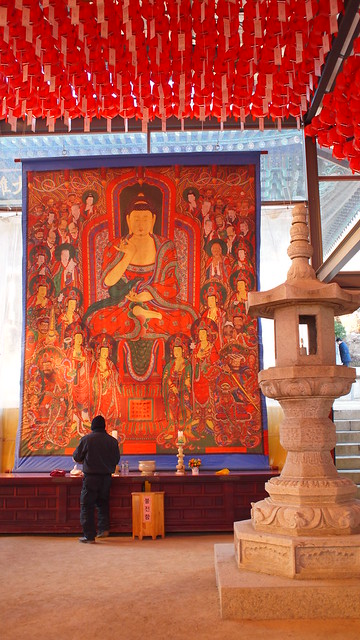
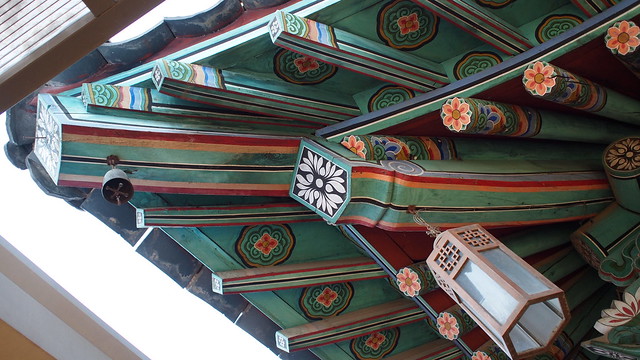
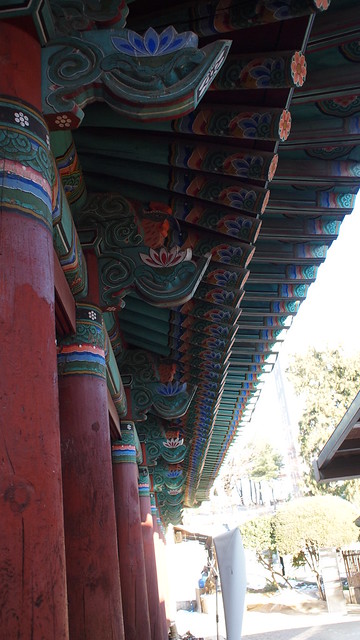
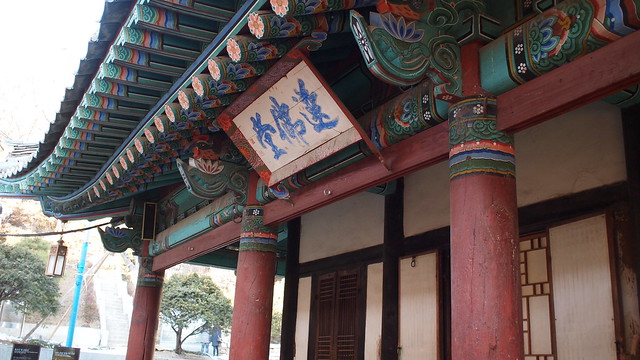
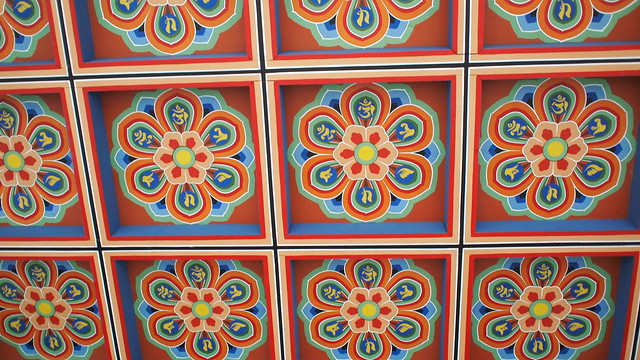
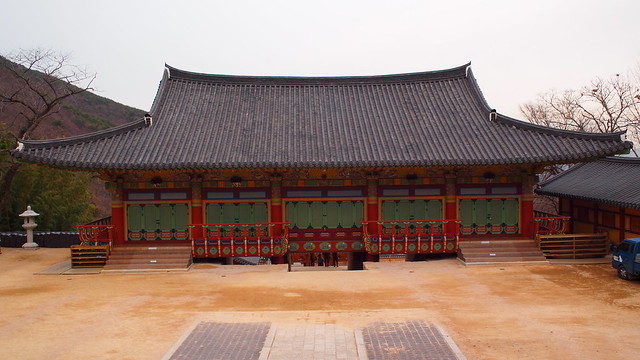
The Bojeru Pavilion (lit. Universal Salvation Pavilion) is the largest hall of Beomeosa Temple and most Dharma assemblies and Buddhist rituals are held here. The current pavilion was newly built through a massive reconstruction to restore traditional architecture in 2012.
Beomeosa Temple

Beomeosa Temple

Beomeosa Temple

Beomeosa Temple

Beomeosa Temple
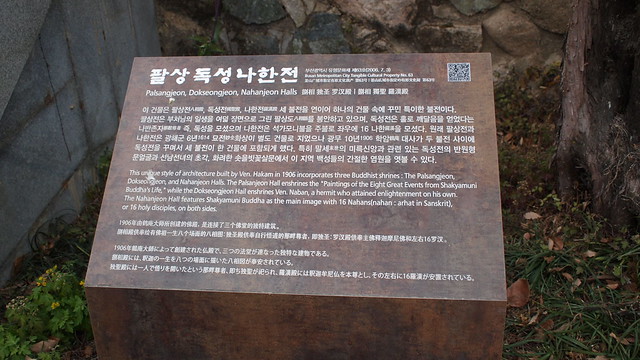
Palsangjeon, Dokseongjeon, Nahanjeon Halls
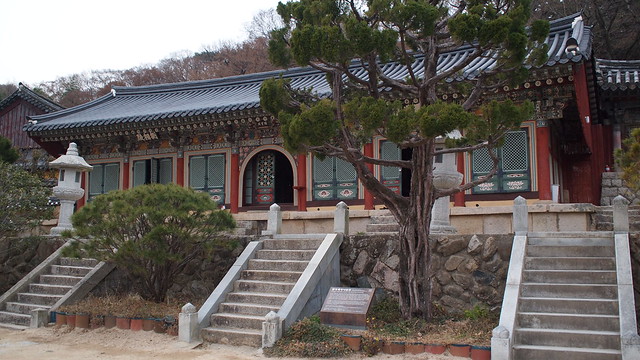
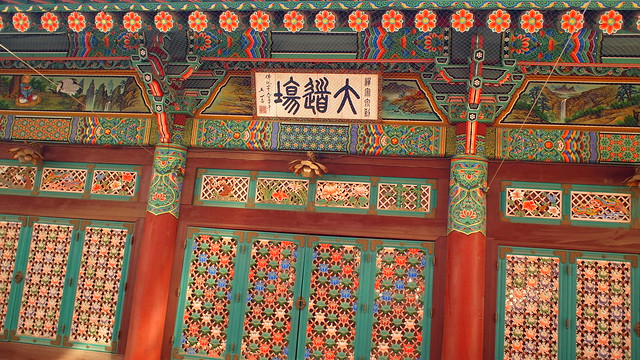
The unique style of architecture by Ven. Hakam in 1906 incorporates three Buddhist shrines: The Palsangjeon, Dokseongjeon and Nahanjeon Halls. The Palsanjeon Hall enshrines the "Paintings of the Eight Great Events from Shakyamuni Buddha's Life", while the Dokseongjeon  Hall enshrines Ven. Naban, a hermit who attained enlightenment on his own. The Nahanjeon Hall features Shakyamuni Buddha as the main image with 16 Naharo (nahan: arhat in Sankrit), or 16 holy disciples, on both sides.
Beomeosa Temple

Beomeosa Temple

Beomeosa Temple

Beomeosa Temple

Sea of Rocks

Beomeosa Temple

Beomeosa Temple
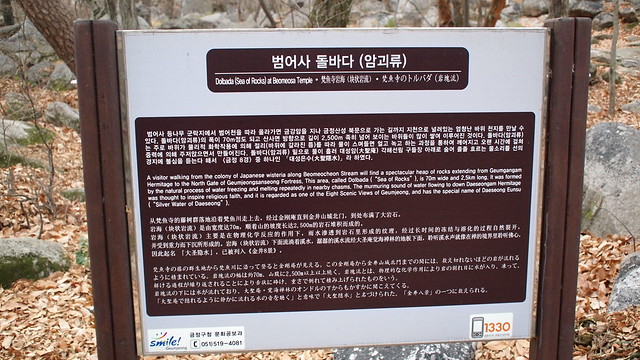
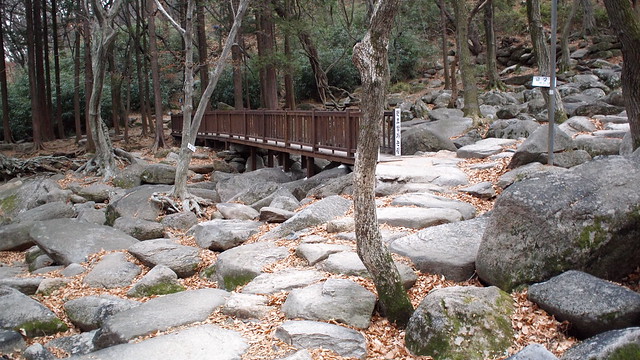
Dolbada (Sea of Rocks) at Beomeosa Temple
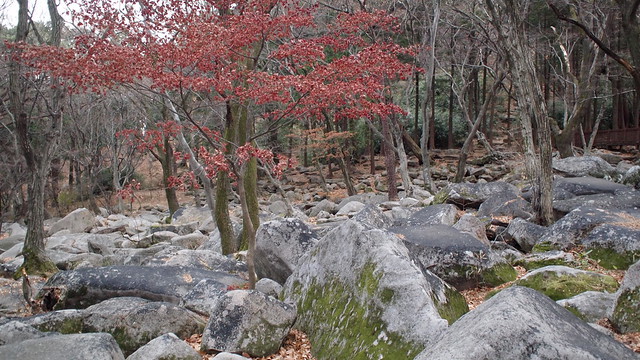
A visitor walking from the colony of Japanese wisteria along Beomeocheon Stream will find a spectacular heap of rocks extending from Geumgangam Hermitage to the North Gate at Geungjeongsanseong Fortress. This area, called Dolbada ("Sea of Rocks" is 70m wide and 2.5km long. It was formed by the natural process of water freezing and melting repeatedly in nearby chasms. The murmuring sound of water flowing to down Daeseongam Hermitage was thought to inspire religious faith, and it is regarded as one of the  eight scenic view of Geumjeong, and has the special name of Daeseong Eunsu ("Silver Water of Daeseong").
Beomeosa Temple

Beomeosa Temple
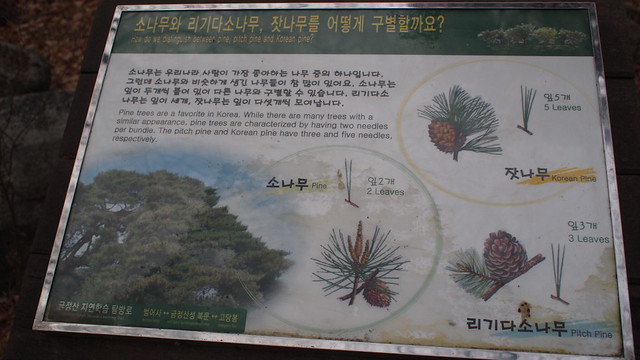
How do we differentiate between Pine, Pitch Pine and Korean Pine?
Pine trees are a favourite in Korea. While there are many trees with a similar appearance, pine trees are characterised by having two needles per bundle. The pitch pine and Korean pine have three and five needles respectively.
Beomeosa Temple

Walking back down

Beomeosa Temple

Beomeosa Temple

Beomeosa Temple

Beomeosa Temple

Beomeosa Temple

Beomeosa Temple

Beomeosa Temple

Beomeosa Temple
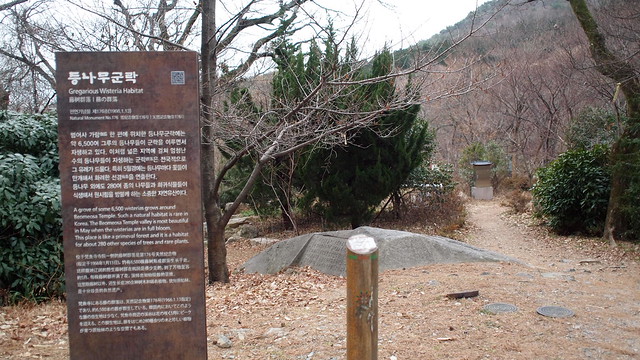
Gregarious Wisteria Habitat
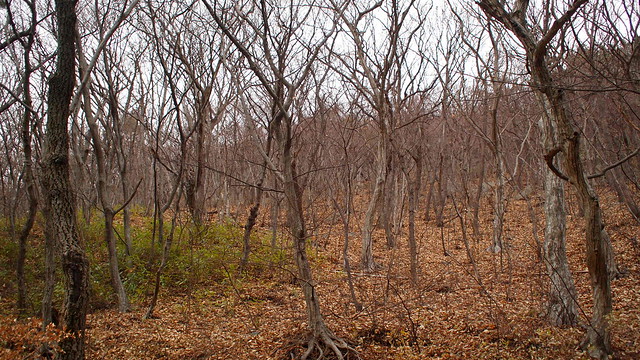
A grove of some 6,500 wisteria grown around Beomeosa Temple. Such a natural habitat is rare in Korea. The Beomeosa Temple valley is most beautiful in May when the wisteria are in full bloom. This place is like primeval forest and it is a habitat for over 200 other species of trees and rare plants.

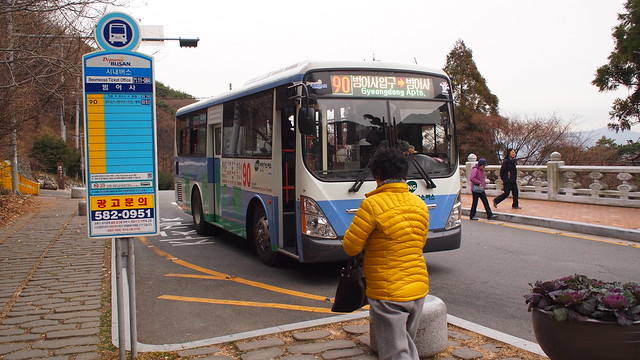
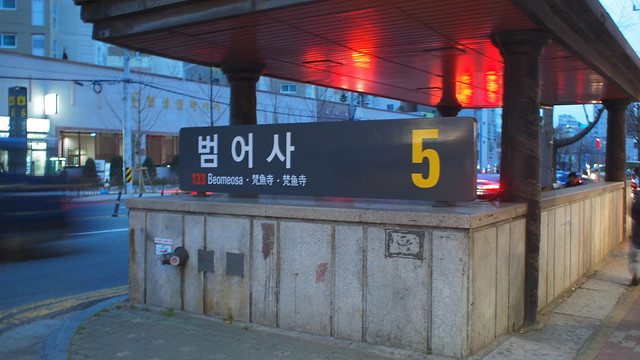
Arrived by bus, leaving by metro
Beomeosa Temple

After Beomeosa Temple, I visited Centrum City which is one half Shinsegae Department Store (the largest one in the world) and one half Lotte Department Store (no sign of the last "Big Three" department store, Hyundai).

After hanging around Lotteria till closing, I headed to Haeundae Spa (had a soak before turning in) for the night, which was rather good a sleep, I managed to sleep beside a power socket even. So good, I couldn't wake up in time to visit the Yonggungsa Temple, nor catch sight of Haeundae Beach.

Saturday, February 7, 2015

Seoul, South Korea: Bongeunsa Temple

I almost ran out of places to visit in Seoul, Korea. Remember it's my second time here. Then I found Bongeunsa Temple, right smack in Gangnam (the Gangnam in Psy's Gangnam Style). Interestingly, it wasn't that easy to keep the temple in its current location, but I'm so glad they did (read on to find out what they did)!

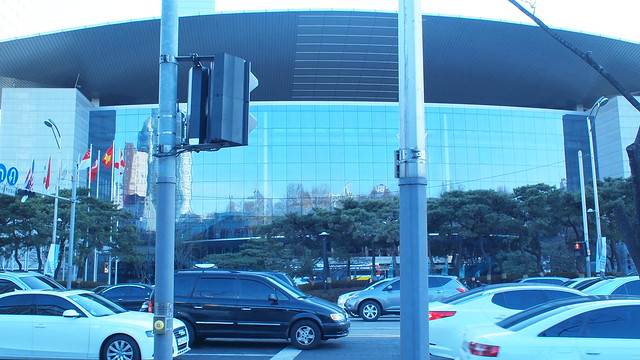
Coex from across the street

Bongeunsa Temple

Bongeunsa Temple

Bongeunsa Temple
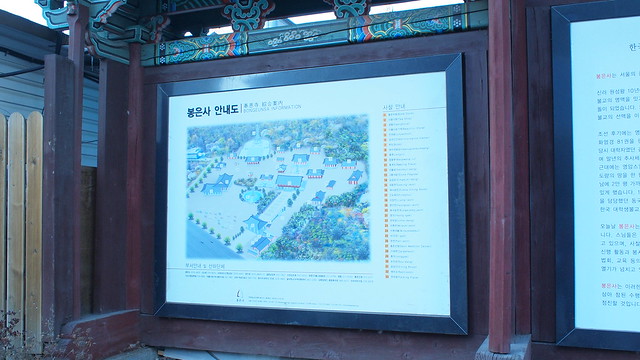
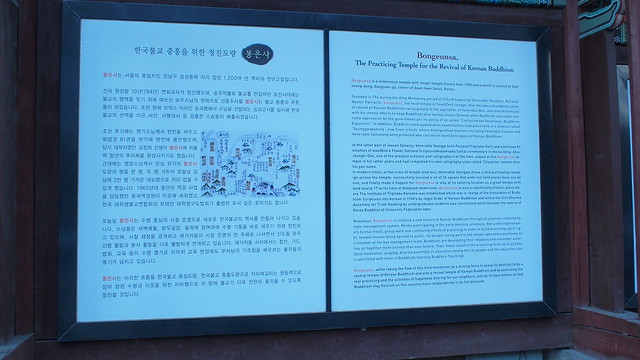
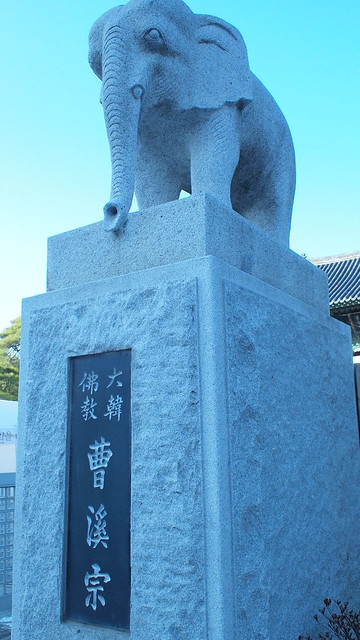
Bongeunsa, the practicing temple for the revival of Korean Buddhism

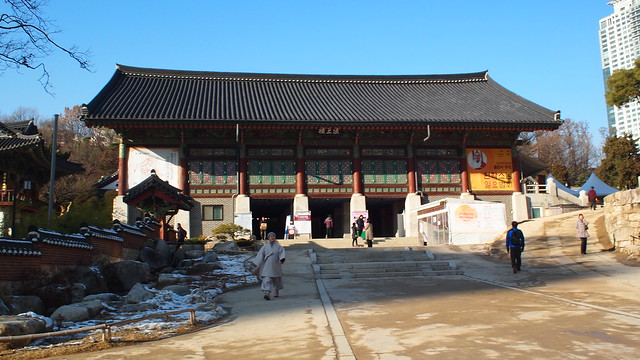
Bongeunsa is a millennium temple with longer history than 1200 years which is located at Saseong-dong. Gangnam-gu, center of down town Seoul, Korea.

Founded in 784, during the King Wonseong period of Silla Kingdom by Venerable Yeonhoei, National Master Patriarch, Bongeunsa, the head temple of Seon (Zen) lineage, later became a foundation stone of revival of Korean Buddhism owing greatly to the aspirations of Venerable Bou, who exerted himself with his utmost efforts to keep Buddhism alive during Joseon Dynasty when Buddhism was under extreme oppression by the government per its policy of so called “Confucianism Reverence, Buddhism Expulsion”. In addition, Buddhist monk qualification examinations took place here at a location called ‘Seunggwapyeong’, now Coex is built, where distinguished masters including Venerable Seosan and Venerable Samyeong were produced who carried on Seon (Zen) legacy of Korean Buddhism.

In the latter part of Joseon Dynasty, Venerable Yeonggi built Panjeon (Tripitaka Hall) and enshrined 81 volumes of woodblock Flower Garland Scripture (Avatamsaka Sutra) commentary in the building. Also, Jeonghi Gim, one of the greatest scholars and calligraphers of the time, stayed in Bongeunsa temple in his latter years and had completed his own calligraphy style called ‘Chusache’ named after his pen name.

In modern times, at the crisis of temple land loss, Venerable Yeongam drove a land purchasing campaign across the temple, successfully secured a lot of 36 square feet wide lost land pieces back one by one, and finally made it happen for Bongeunsa to stay at its existing location as a great temple withland nearly 17 acres here at Gangnam down town. Bongeunsa is also a significantly historic place where The Institute of Tripitaka Koreana was established which was in charge of the translation of Buddhism Scriptures into Korean in 1960 by Jogye Order of Korean Buddhism and where the first Dharma Assembly for Truth Seeking by undergraduate students was constituted which became the matrix of Korean Buddhist of University Federation later.

Nowadays, Bongeunsa is creating a new history of Korean Buddhism through its practice-centred temple management system. Monks participating in the early morning ceremony, Baru offering (monastery formal meal), group work and continuing efforts of practicing in order to build practicing spirit right, temple finance being opened for public, lay people taking part in the temple operations positively as a member of the key management team. Buddhists are developing their religious and volunteer activities all together more actively than ever before. Then, these result in the practicing fever such as Seon (Zen) meditation, praying, dharma assembly or education among the lay people and the education site is also filled with fever of Buddhists learning Buddha’s Teachings.

Bongeunsa, while taking the flow of this kind movement as a driving force to place its position to be a central temple of Korean Buddhism and also a revival temple of Korean Buddhism and by exercising the real practicing and the activities of happiness sharing for our neighbours, will do its best efforts so that Buddhism may flourish on this country more resplendently in its full blossom.

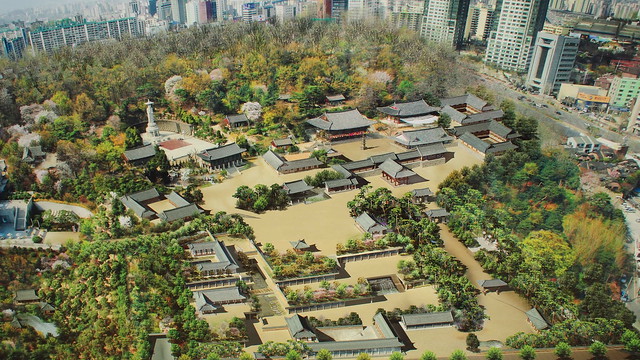
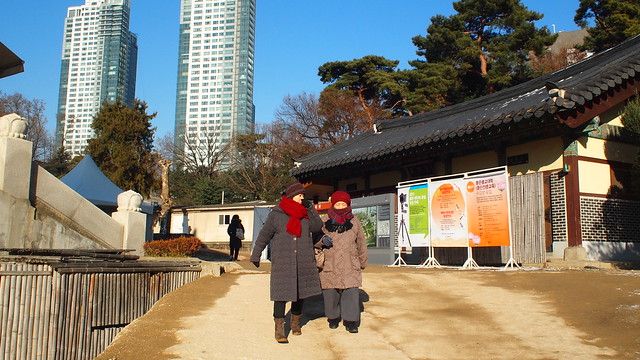
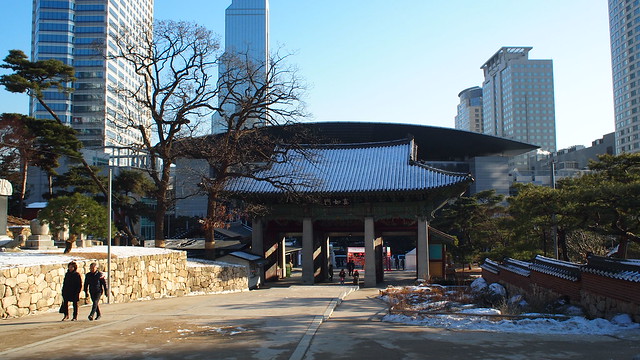
A sanctuary surrounded by skyscrapers (this is a photo of a photo)

Bongeunsa Temple

Bongeunsa Temple

Bongeunsa Temple

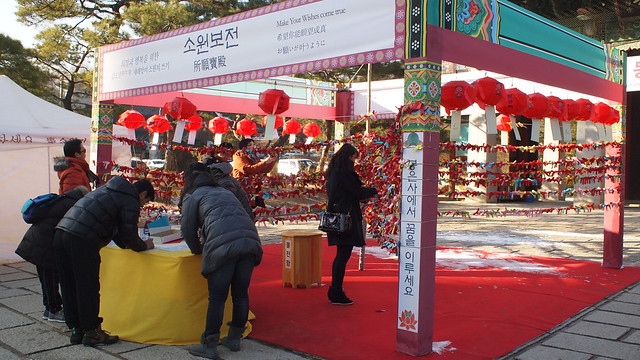
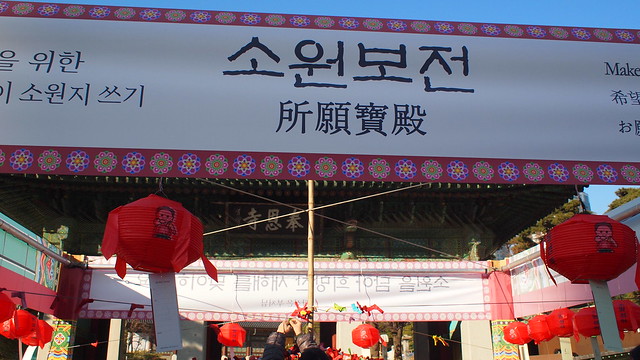
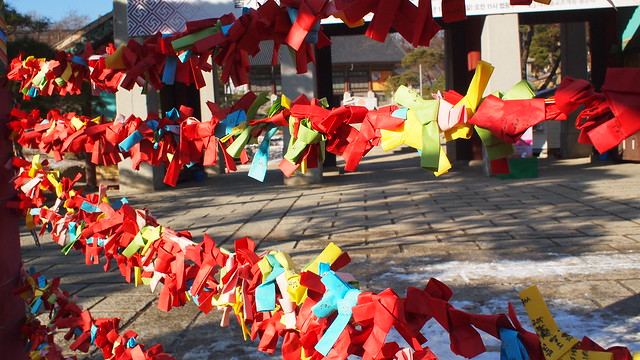
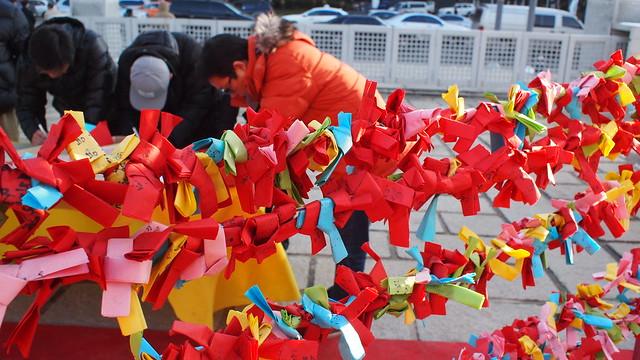
There is a wish-making station in front of the temple at the time.

Bongeunsa Temple

Bongeunsa Temple

Bongeunsa Temple

Bongeunsa Temple

Bongeunsa Temple

Bongeunsa Temple

Bongeunsa Temple

Bongeunsa Temple

Bongeunsa Temple

Bongeunsa Temple

Bongeunsa Temple

Bongeunsa Temple

Bongeunsa Temple

Bongeunsa Temple

Bongeunsa Temple

Bongeunsa Temple

Bongeunsa Temple

Bongeunsa Temple

Bongeunsa Temple

Bongeunsa Temple

Bongeunsa Temple

After visiting the temple, I headed to COEX Mall... to watch the Hunger Games! Something I wouldn't do back home, but it's interesting to enjoy the plush seats and... thankfully they didn't dub over the original.

Featured

My Japan Itinerary (December 2012 and June 2016)

Related Posts Plugin for WordPress, Blogger...