Showing posts with label Kiyomizudera. Show all posts

Wednesday, August 27, 2014

Kyoto, Japan: Otowa Spring

Drink to fulfill wishes and for a healthy long-life

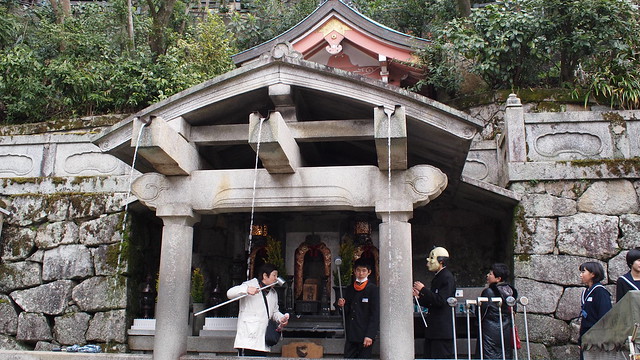
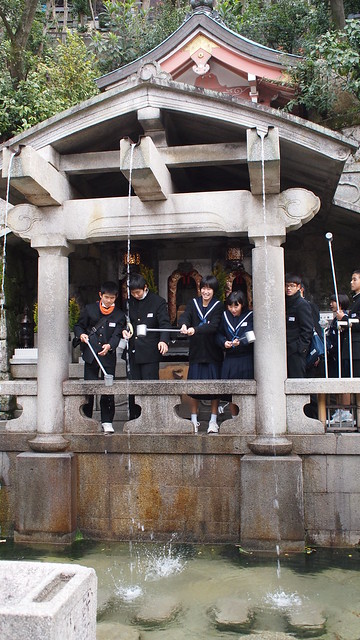
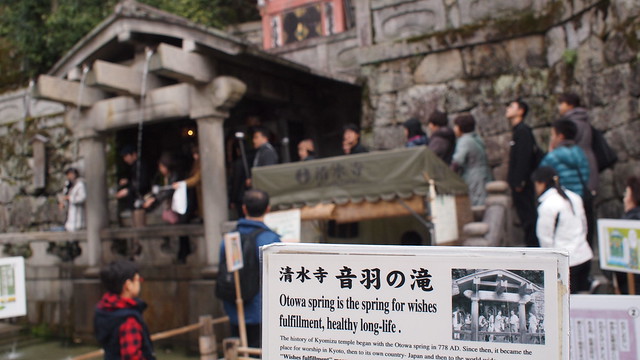
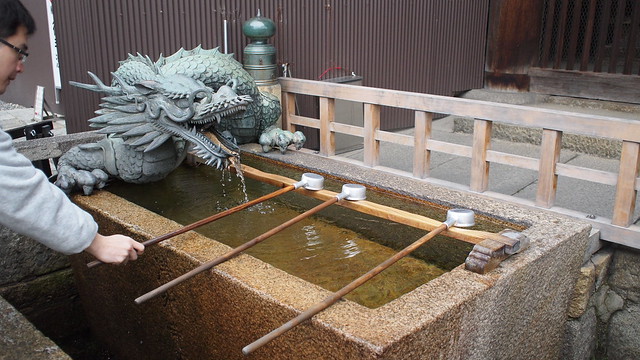
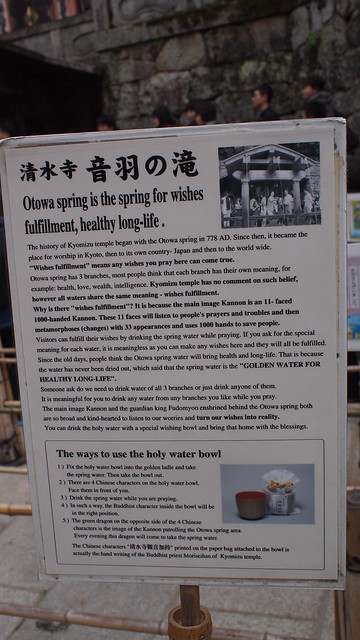
The Otowa Springs is set on the grounds of the Kiyomezu-dera Temple, just wander. The history of the temple began with the Otowa Spring in 788 AD. According to the sign, and the legend, any wishes you pray for here can come true. Some even believe that each of the 3 branches of the spring has its own meaning, such as health, love, wealth, intelligence (that's four!). To the temple at least, all water share the same meaning. How are the wishes fulfilled? Visitors are to drink the spring the water while praying. The Kannon (or God or Goddess) has 11 faces to listen to people's prayers and troubles, 33 appearances to morph into and 1000 hands to save people. I'm reminded of the 1000-hand bodhisattva, Guanyin or Goddess of Mercy that my family prays to.

You can even get a special wishing bowl and bring home the blessings.
Kiyomizudera

Kiyomizudera

Kiyomizudera

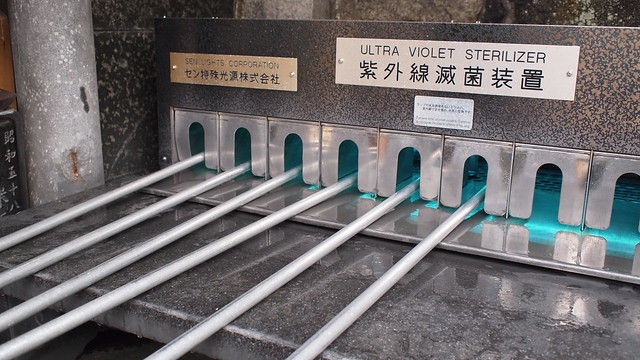
I'm impressed that they have such facilities.
Kiyomizudera

Kiyomizudera

Leaving the grounds of the Temple
Kiyomizudera
Kiyomizudera

Kiyomizudera

Kiyomizudera

Kiyomizudera

Kiyomezu-dera, the Jishu Shrine and the Otowa Spring - what  a great day-trip off Gion.

More pictures are available on my Flickr (simply click any photo).

Otowa Spring
Cost: free

Monday, August 25, 2014

Kyoto, Japan: Jishu Shrine

Visit the Cupid of Japan, See the Love Stones, Get your Fortune

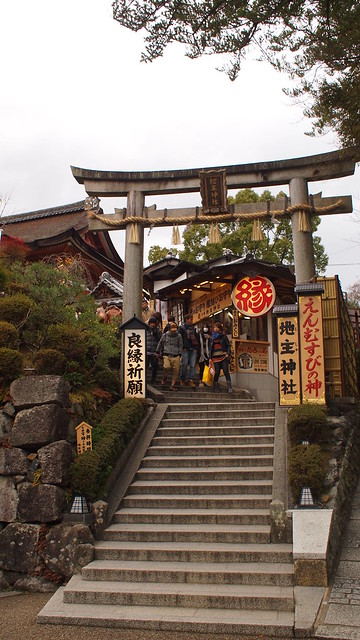
Around the grounds of the Kiyomizure Temple, it will be hard to miss the Jishu Shrine and the Otowa Spring, as there will be hoards of people buying love charms and queuing for a drink.

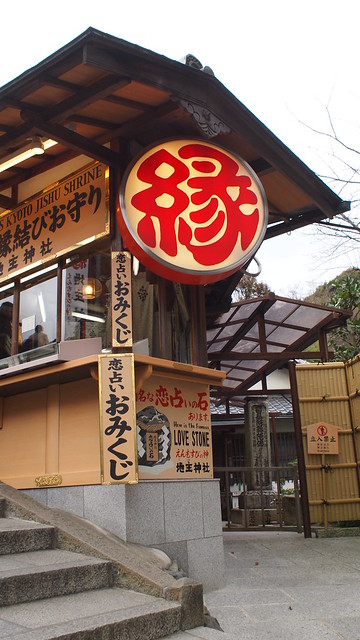
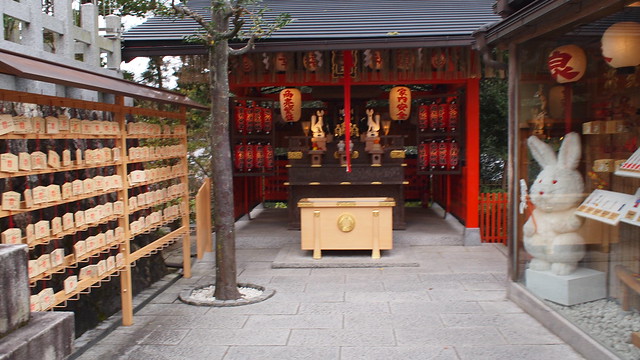
The Jishu Shrine, which houses "the cupid of Japan", is not a part of the Kiyomizu-dera, and is believed by young people especially, to be the dwelling place of the god of love and matchmaking (imagine the implications!).

Kiyomizudera

Kiyomizudera

Kiyomizudera

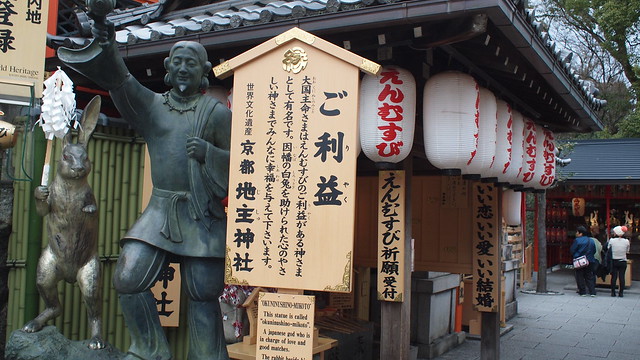
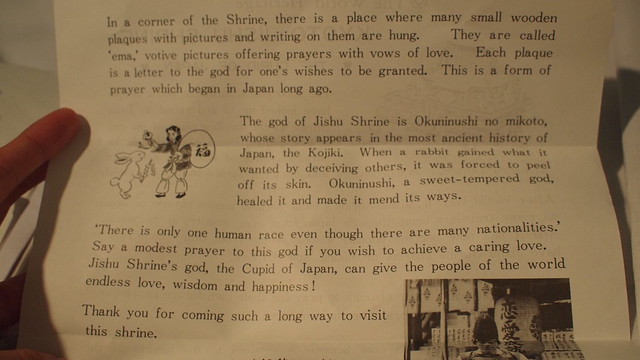
The love god, Okuninushi no Mikoto's story appears in the ancient history book of Japan, the Kojiki. In the story, a rabbit deceived others for its own gains and was forced to peel off its skin. Okuninushi, a sweet-tempered god, healed it and made it mend its ways.

Kiyomizudera

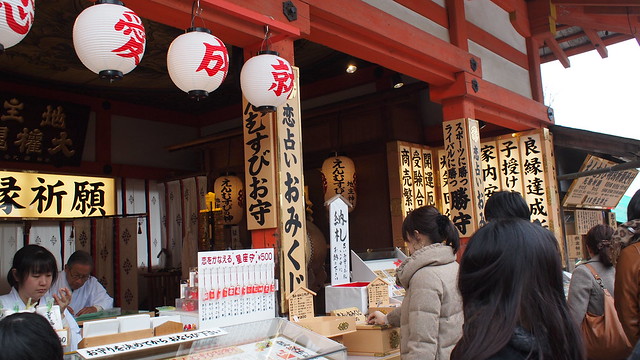
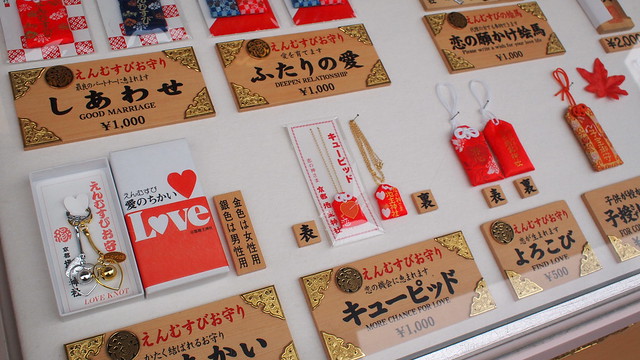
Get a Jishu Shrine charm, which promises 'splendid love' for your own happiness or that of your children from 500 yen.

Kiyomizudera

Kiyomizudera

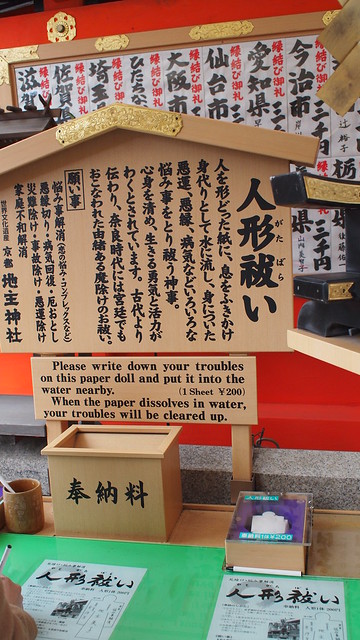
Get a paper doll.

Kiyomizudera

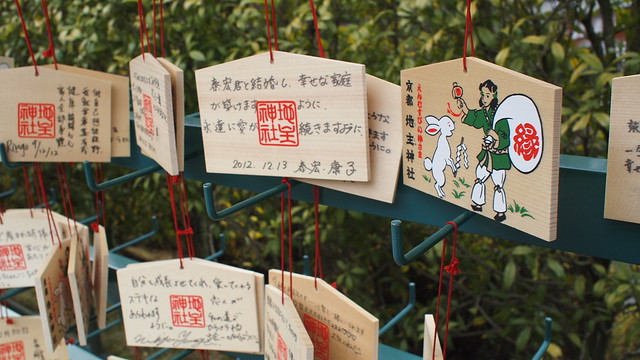
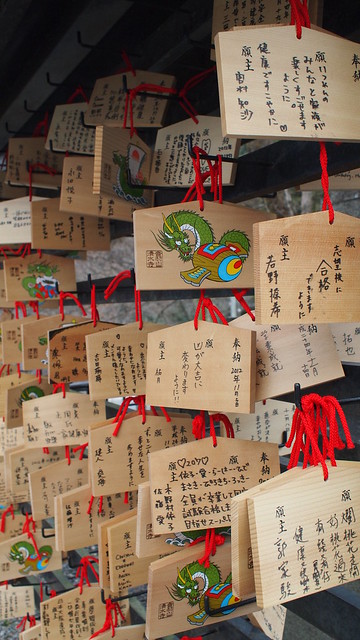
Or, hang an 'ema' plaque to pray for love.

Kiyomizudera

Kiyomizudera

Kiyomizudera

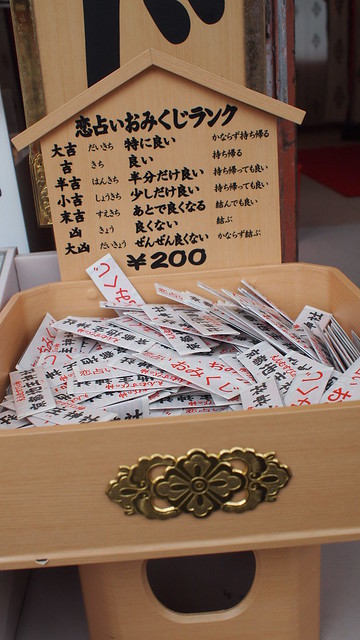
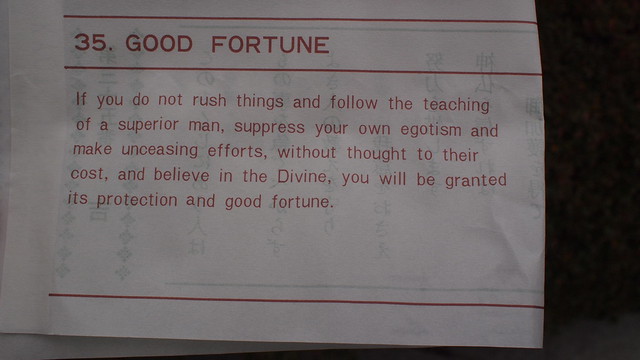
I couldn't resist an English fortune!

Kiyomizudera

Kiyomizudera

Kiyomizudera

Kiyomizudera

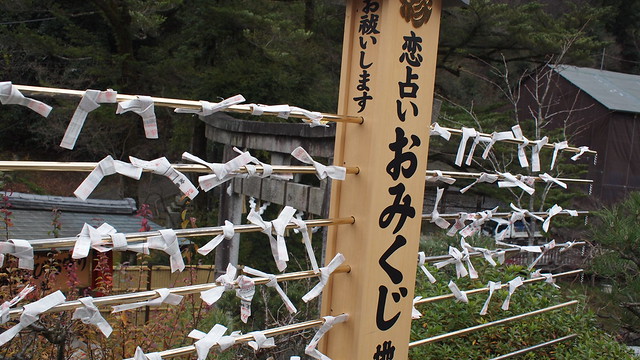
If it's bad, leave it.

Kiyomizudera

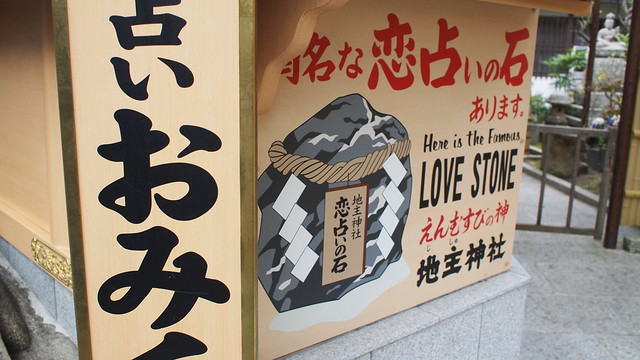
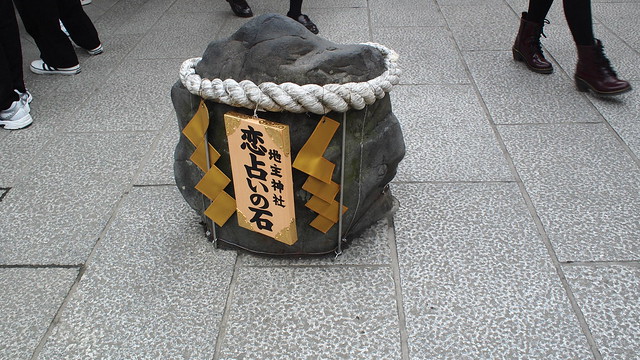
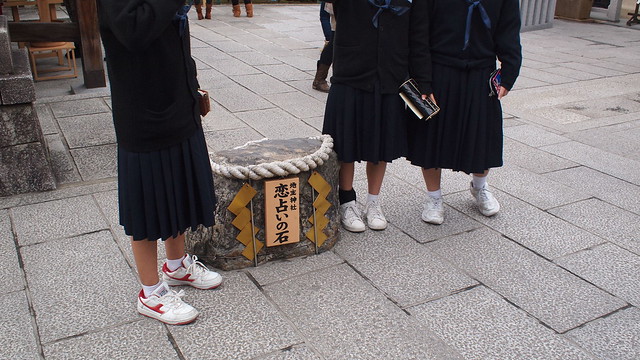
The two "love fortune-telling" stones are about 10 metres apart. If you walk safely from one stone to the other with eyes closed, your love will be realized (darn, I didn't know then).

Kiyomizudera

Kiyomizudera

If you do get married after a visit, remember to return to the shrine to offer your thanks!

Kiyomizudera

Kiyomizudera

Kiyomizudera


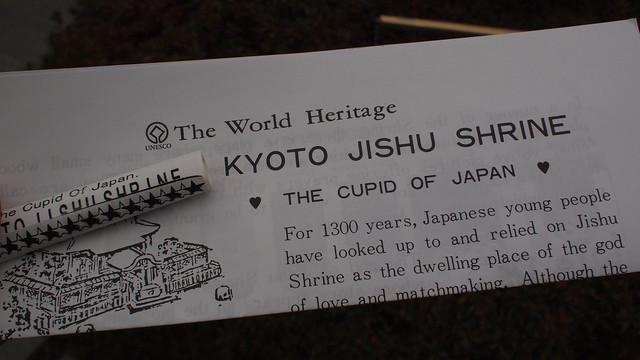
I love the messages in the English information sheet.
There is only one human race even though there are many nationalities.
I sure hope the Cupid of Japan can give the people of the world endless love, wisdom and happiness. Also,
Thank you for coming such a long way to visit this shrine.
P.S. Jishu Shrine, the pleasure is all mine. And to you who is reading this post, thank you for dropping by, and I wish you, endless love, wisdom and happiness.

More pictures are available on my Flickr (simply click any photo).

Cost: free

Friday, August 22, 2014

Kyoto, Japan: Kiyomizu-Dera Temple

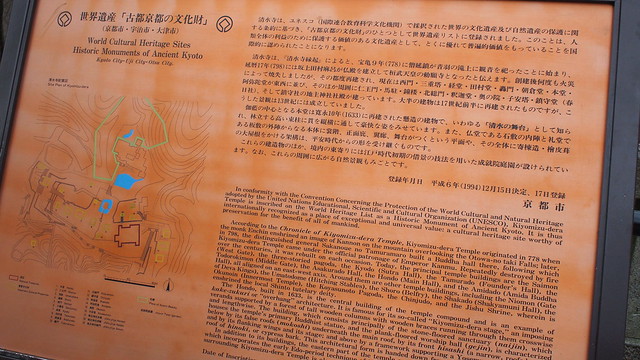
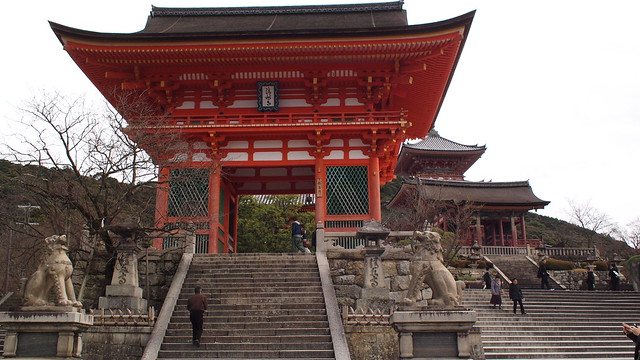
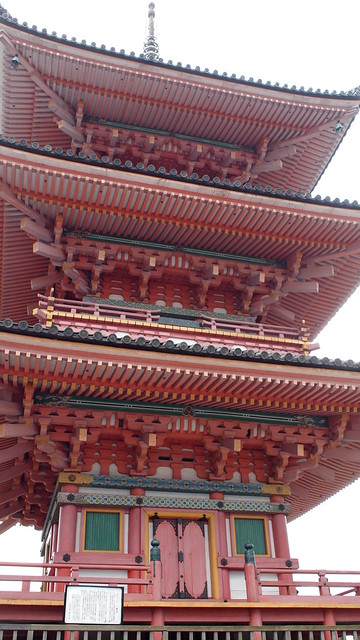
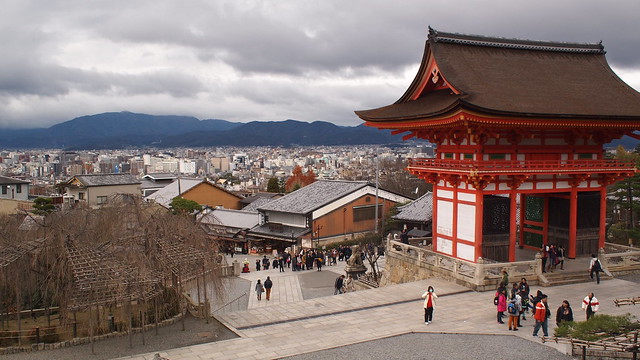
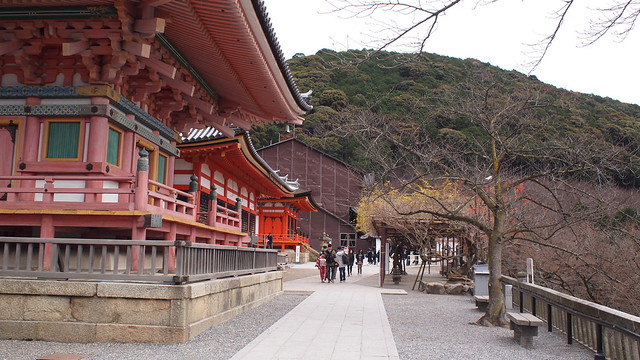
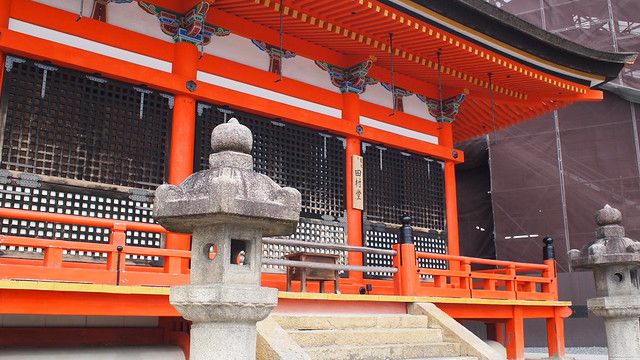
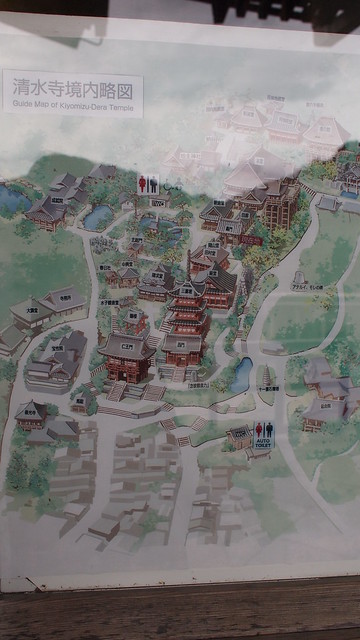
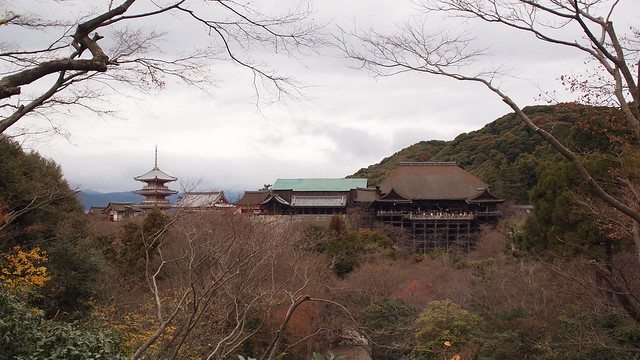
Kiyomizu-Dera Temple is a Buddhist temple that belongs to the Kita Hoso sect founded by the Great Priest, Enchin, in the 8th year of Hoki (778 AD). In the main sanctuary, it enshrines an image of Kannon (God of Mercy) Bosatsu (Bodhi-Sattva). The structures on the grounds rebuilt in the 17th century include a Romon (two-storey gate), a Sanjunoto (three-storey pagoda), the Hondo (main Hall) and a Shoro (belfry). In spring, visit for the cherry blossoms, and in autumn, the maple trees.

Kiyomizudera

Kiyomizudera

Kiyomizudera

Kiyomizudera

Kiyomizudera

Kiyomizudera

Kiyomizudera

Kiyomizudera

Kiyomizudera

Kiyomizudera

Kiyomizudera

Kiyomizudera

Kiyomizudera

Kiyomizudera

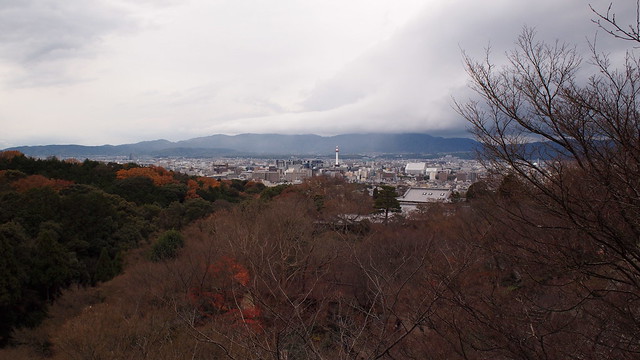
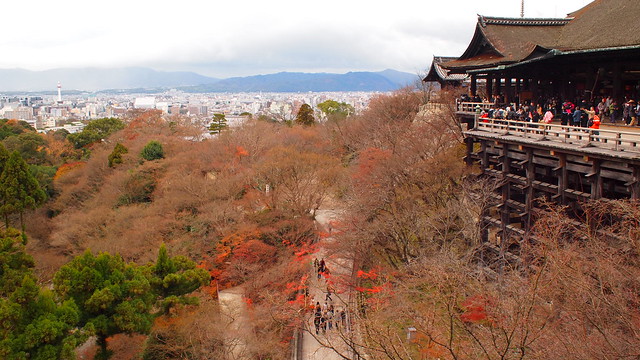
Kyoto Station in a distance

Kiyomizudera

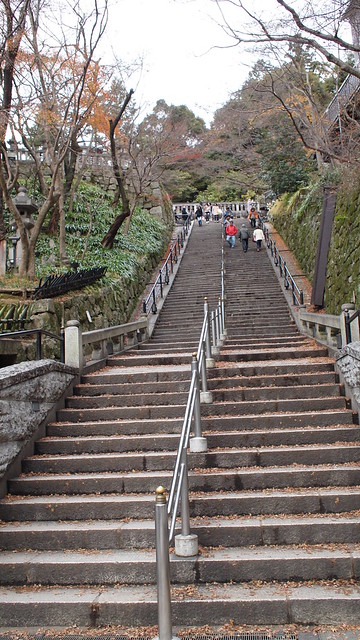
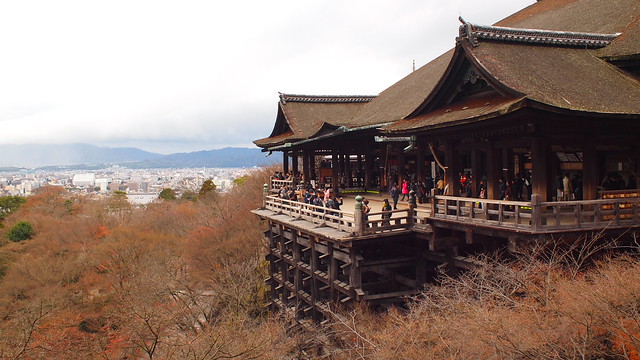
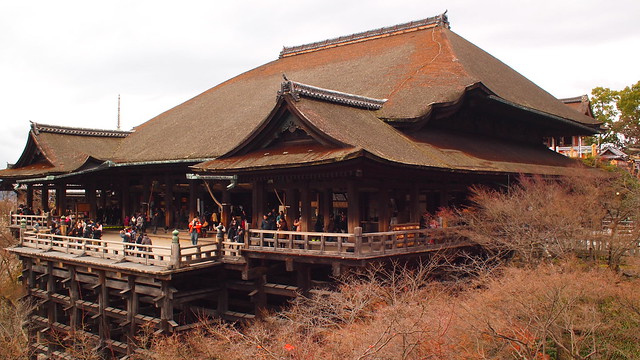
The climb is worth it because, not only will you be rewarded with a panoramic view of Kyoto, but you will be greeted with the Hondo, the central building of the temple compound. Built in 1633, it is an example of the kake-zukuri or "overhang" architecture. The "Kiyomezu-dera stage" is a veranda supported by tall wooden columns with wooden braces. Notice too, the hinoki, or cypress bark, roof, dating back to the Heian period (794 - 1184).

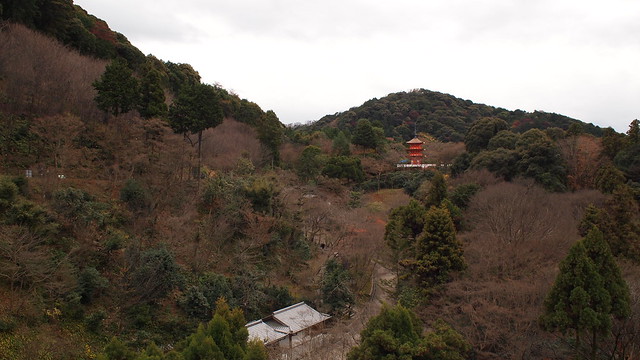
The UNESCO inscription also states that the natural scenery is "quite beautiful" which to me is an understatement. I don't think there are many temples built on a hill amidst such lush vegetation.

Kiyomizudera

Kiyomizudera

Kiyomizudera

Kiyomizudera

Kiyomizudera

Kiyomizudera

Coming up: More about the temple grounds.

More pictures are available on my Flickr (simply click any photo).

Cost: 200 to 400 yen (Special night opening available!)

Featured

My Japan Itinerary (December 2012 and June 2016)

Related Posts Plugin for WordPress, Blogger...